


Prix Fémina, Goncourt, Wepler, Le Monde… Choosing among the avalanche of literary prizes released each year is no easy feat. To spare you hours wandering through your favorite bookstore, your devoted Do It Team has done the work for you: Laurent Mauvignier and his Maison Vide, Haute Folie by Antoine Wauters, Les Éléments by John Boyne… This is your catch-up session for the very best award-winning books of the year.
A House Filled With Stories
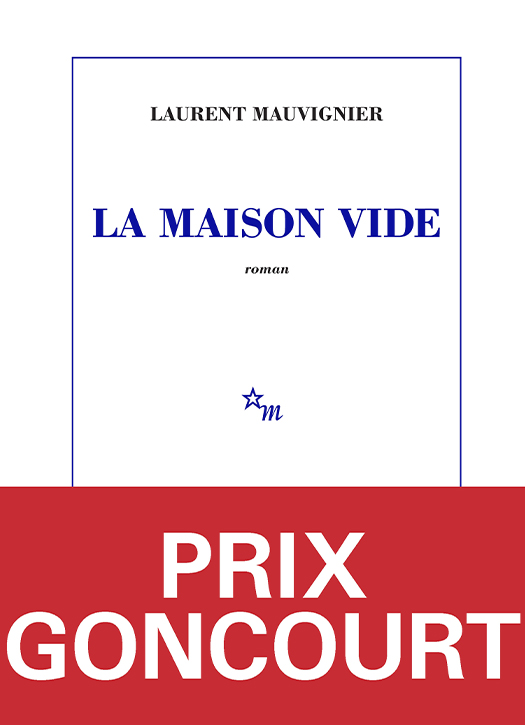
The must-read: La Maison Vide by Laurent Mauvignier, Prix Goncourt.
The pitch. You open this book as you would gently push the door of an unfamiliar house—on tiptoe, breath caught, hungry for answers. An imposing home, lands passed down like treasure: we are at the start of the last century, in the heart of Touraine. When this empty house opens, silence is questioned, along with the objects left behind nearly twenty years earlier: a medal, a dusty piano, an old chest of drawers, torn photographs.
“Fouillé — j’ai fouillé partout où j’étais pour ainsi dire sûr de retrouver les yeux fermés…” Thus begins this vast family saga, narrated by Marie Marguerite, Laurent’s great-grandmother. Through her, we meet Jules, her husband, and Marguerite, their daughter — a fortress of silence, dishonored during the Occupation, her face scratched out of photos. By digging into this past, Mauvignier uncovers the weight of trauma and the silence inherited across generations.
Why you’ll love it. After Histoire de la nuit and Continuer, it took nearly five years for Laurent Mauvignier to deliver this masterpiece — a rare, intimate novel. Through this autobiographical tale, he retraces the chaotic paths of the lives that shaped his own, exploring women crushed by convention and men trapped in destructive masculinity. With sentences that hold their breath and stretch across pages, the author pays tribute to the women who carried his family, and to his father, who took his own life when Laurent was only 16. It’s a luminous attempt to mend a childhood fear that time never erased.
A Kaleidoscope of Ordinary Lives
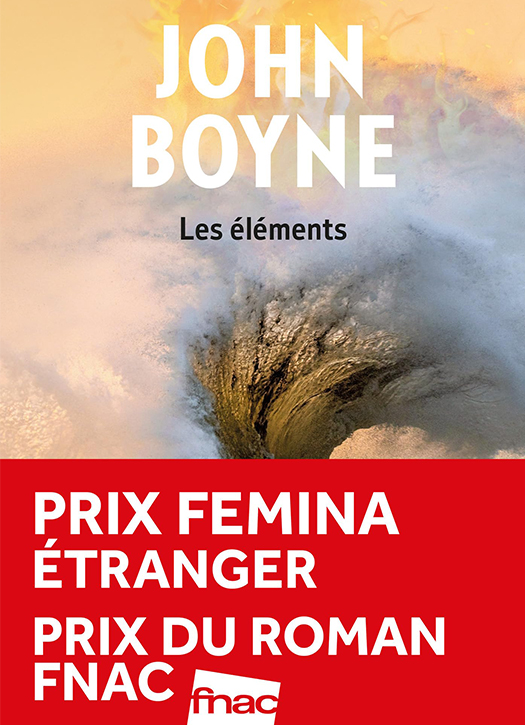
The must-read: Les Éléments by John Boyne, Prix Femina Étranger.
The pitch. Les Éléments was first published in the UK as four short stories. Water. Vanessa, in her fifties, settles on a remote Irish island to escape the disaster she left behind — one she still cannot forgive herself for. Earth. Evan flees his father’s toxic masculinity, trades his dream of becoming a painter for a successful football career, and finds himself on trial.
Fire. Freya, a surgeon specializing in burn victims, battles old demons. Air. Aaron, a child psychologist, and his 14-year-old son fly to Ireland for a journey they hope will heal them. Now united in a single volume, the red thread linking these characters becomes beautifully clear, resonating across their intertwined destinies.
Why you’ll love it. With Les Éléments, John Boyne crafts a powerful tapestry of human experience — four lives, four worlds, four metaphors for the elements that shape us. The stories explore painful themes with honesty and empathy: toxic families, guilt, innocence lost, and the scars of childhood. Victim, perpetrator, accomplice — each character steps into their role to confront the darkness of human nature. A gripping, beautifully intense read.
A Deep Dive Into Childhood
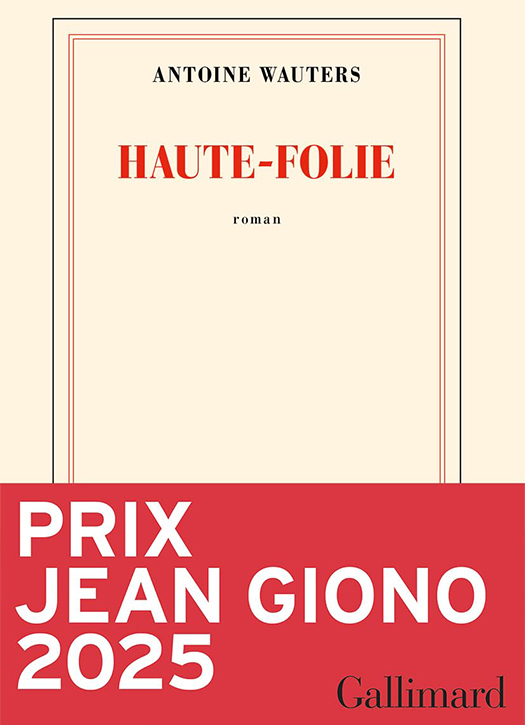
The must-read: Haute Folie by Antoine Wauters, Prix Jean Giono.
The pitch. Haute-Folie is the name of the family farm: “Our entire story lies in its name,” we are warned. On the day Josef is born, lightning strikes a tree and sets his parents’ farm ablaze. Gaspard and Blanche lose everything, plunging the family into ruin and leaving Josef orphaned. Raised by his aunt and uncle, who bury the past in silence, he grows up tormented.
Later, as a wanderer, he becomes a solitary man, devoured by a past he doesn’t understand but cannot escape. At forty, Josef returns to Haute-Folie. He wants answers. He wants to confront his destiny. He seeks the truth about his childhood to break the chain of inherited tragedy — to ensure silence won’t win in the end.
Why you’ll love it. Readers devour Antoine Wauters the way one devours a Greek tragedy. His prose is sharp, lyrical, luminous, exploring marginal lives, family curses, and unspoken traumas. Haute-Folie adopts an almost poetic form, punctuated by a mysterious narrator. As in Mahmoud ou la montée des eaux, Le musée des contradictions, or Le plus court chemin, Wauters digs into the human soul, illuminating even its darkest corners.
A Harrowing Tale of Feminicide
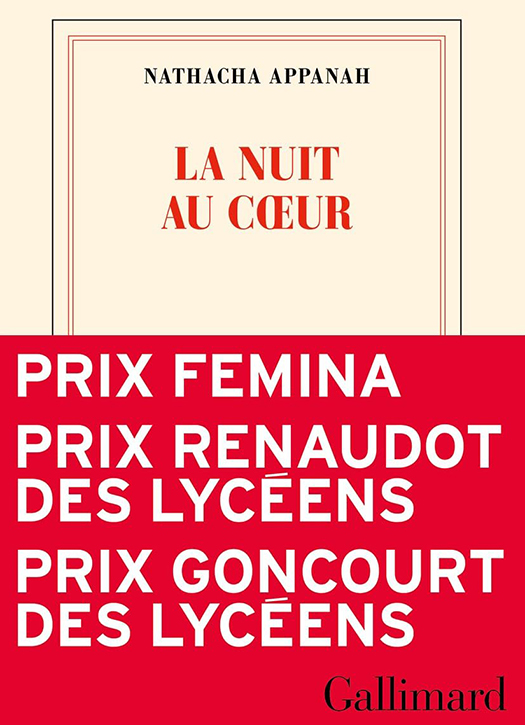
The must-read: La nuit au cœur by Nathacha Appanah, Prix Goncourt des lycéens, Prix Renaudot des lycéens, Femina.
The pitch. Three women running, years and places apart. At first glance, nothing connects them — except their frantic race and their pounding hearts. Three destinies echoing one another through darkness: each is trapped in an abusive relationship defined by control, humiliation, violence. Only one of them survives. Emma dies in 2000. Chahinez in 2021.
“Of these three women, one had to begin with the first — twenty-five years old, running, the only one still alive. That woman is me.” Nathacha Appanah dives into their stories, contacting families to understand how one comes to accept the unacceptable. She resurrects these women, freeing them from the frozen image of victims.
Why you’ll love it. With strength and clarity, Nathacha Appanah dissects the terrifying mechanisms of intimate partner feminicide. La nuit au cœur plunges us into a necessary darkness, forcing us to confront a reality that has grown dangerously commonplace. Emotionally intense, the book moves from sadness to anger, from revolt to fear — but every page matters, leaving us changed.
The Secret Life of Milady
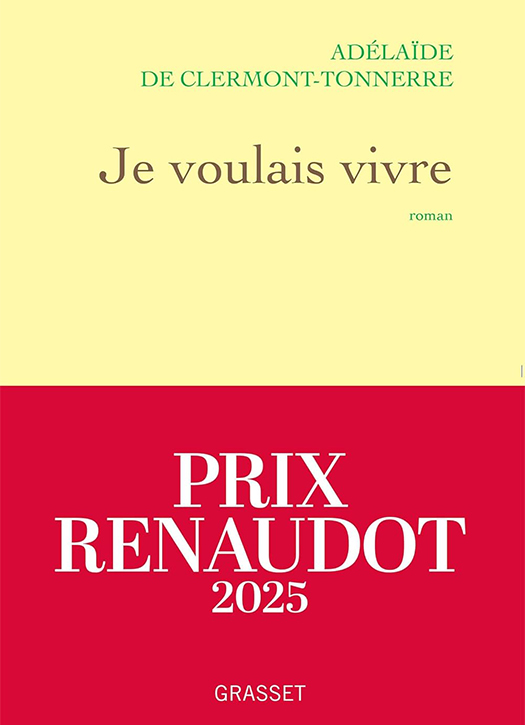
The must-read: Je voulais vivre by Adélaïde de Clermont-Tonnerre, Prix Renaudot.
The pitch. Who was Milady de Winter, the sworn enemy of the Three Musketeers? Who hides behind the names Charlotte Backson, Anne de Breuil, Lady Clarick? In Alexandre Dumas’ classic, she is portrayed as manipulative, treacherous, murderous. But here, the shadow of Dumas fades, revealing a woman full of flaws, wounds, and brilliant resilience.
We meet her as she escapes an attempted murder and is rescued by a priest who knows only her name: Anne. From there unfolds a rebellious adolescence and a life where survival instinct outweighs the villainy painted by Dumas. Milady becomes a modern heroine whose quest for freedom rivals her determination to claim it.
Why you’ll love it. From Le dernier des nôtres to Fourrure, Adélaïde de Clermont-Tonnerre excels at portraying dazzling characters and extraordinary destinies. With Je voulais vivre, she revisits The Three Musketeers with subtlety, plunging us back into the 19th century and restoring dignity to a woman too long relegated to villainy. A brilliant reinterpretation.
Also discover 5 New Series to Binge-Watch This December et The books you HAVE TO read before their movie adaptation