

When it comes to Japanese green tea, most people instantly think of matcha—the ultimate star flooding Parisian coffee shops. But have you tried its counterparts like sencha, genmaicha with toasted rice, or roasted hōjicha? Whatever your favorite, the key is to choose top-quality tea to fully enjoy its health benefits and glow all season long. Here’s everything you need to know about this 100% light wellness elixir we can’t get enough of.
What is Japanese green tea?
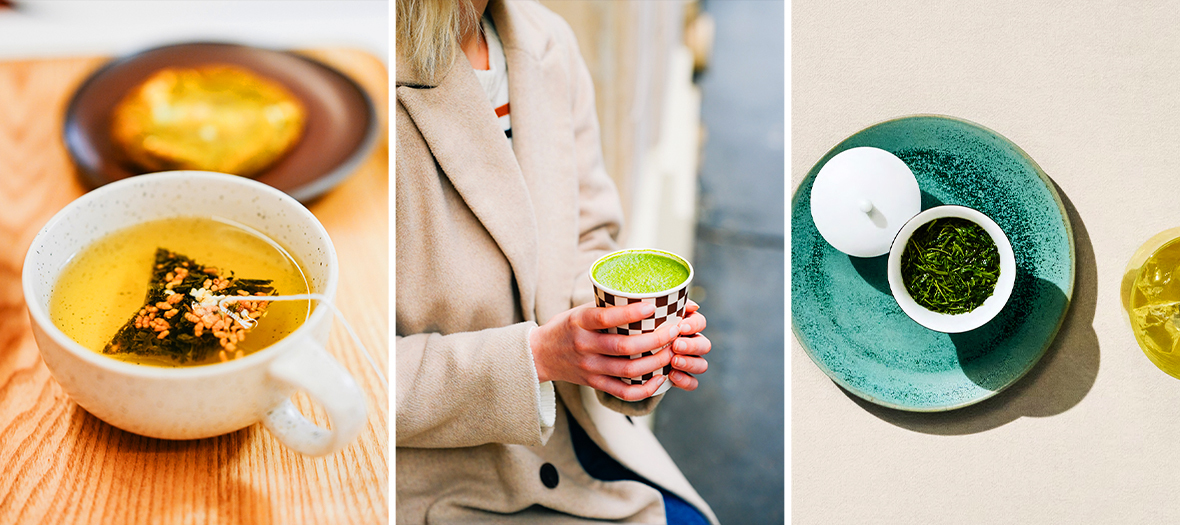
Matcha, first introduced in Japan in the 9th century, was long reserved for Buddhist monks—then later for samurai and the aristocracy. In the 16th century, shaded tea cultivation began in Uji, significantly enhancing both flavor and quality, while also enabling the creation of multiple green tea varieties and brewing methods.
High-quality Japanese green tea reflects a timeless philosophy rooted in nature, harmony, and spirituality. As its popularity spread worldwide, cultivation expanded across the archipelago, particularly in Shizuoka, Kagoshima, and the Kinki region. Loved for its freshness and signature umami smoothness, it differs from other teas thanks to its steamed leaves, which prevent oxidation. The result? Powerful health benefits that make it a top-tier wellness drink.
Health benefits of Japanese green tea
Japanese green tea is packed with amino acids, catechins, and vitamin C. Effortlessly, it helps reduce stress, boost cognitive function (perfect for memory and focus), strengthen the immune system, and protect cells from premature aging.
In short: it’s a naturally beneficial drink you’d be wrong to skip—at any time of day.
Drink it from morning to night

Refined yet minimalist, this premium artisanal product can be enjoyed from sunrise to bedtime, with each variety (“cha” in Japanese) offering unique characteristics.
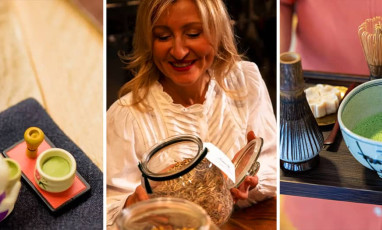
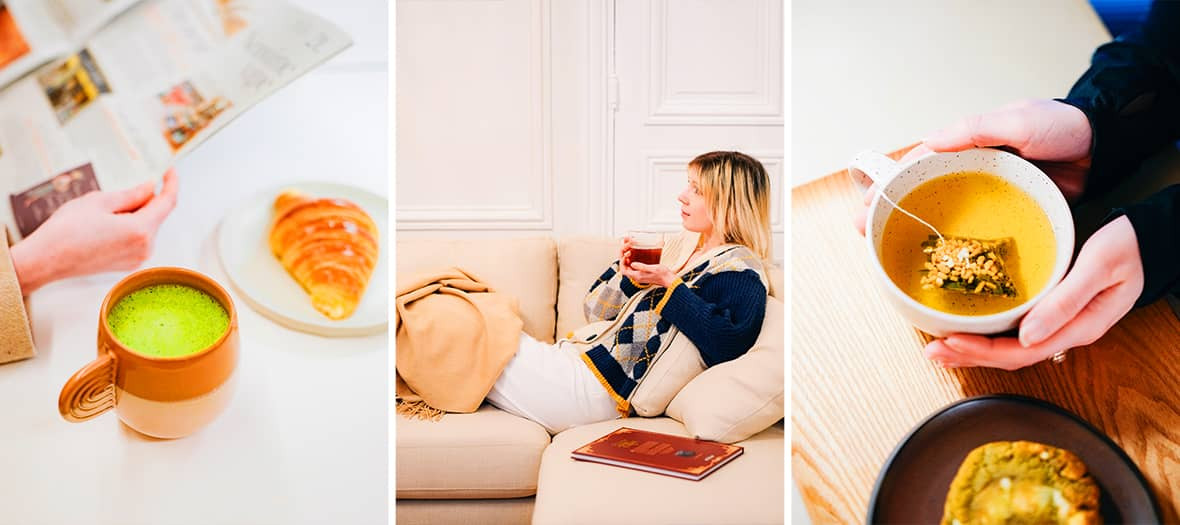
Our tip? Start your day with an energy boost from a cup of matcha—ideally prepared with hot water rather than plant-based milk, and whisked in a bowl according to tradition.
Mid-morning break? Go for a sencha, the most widely consumed tea in Japan, known for its fresh, vegetal, spring-like flavor.
In the late afternoon, instead of downing three coffees that leave you jittery, opt for a soothing green tea: genmaicha. Completely addictive and calorie-free, its subtle nutty flavor comes from toasted rice, making it our absolute favorite.
To end the day, indulge in the roasted, woody notes of hōjicha. This low-caffeine green tea can be enjoyed in the evening despite its darker color. Comforting and calming, it helps prepare the body for sleep and is the perfect solution for recurring insomnia.
Our favorite spots in Paris to find them
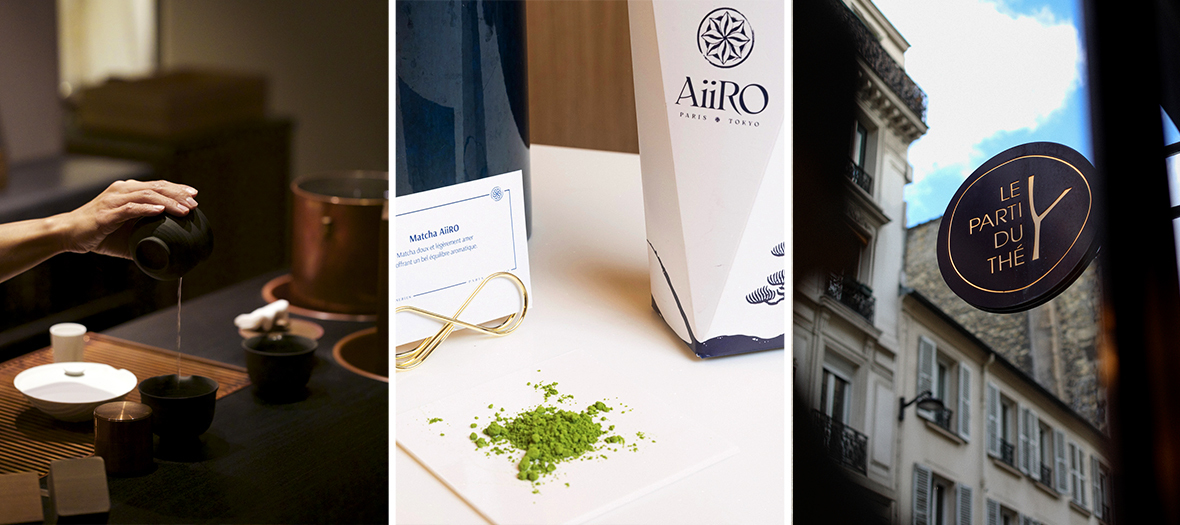
Matcha, sencha, genmaicha, and hōjicha can be found in a selection of expert addresses in Paris that specialize in Japanese green tea. Here are our top picks:
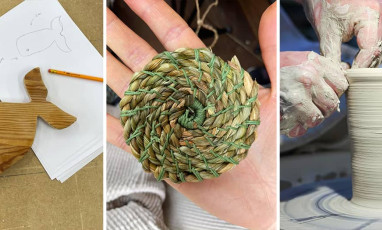
- Ogata: A boutique, tea room, and restaurant in Le Marais offering regular workshops dedicated to Japanese green tea (16 rue Debelleyme, Paris 3rd)
- Jugetsudo By Maruyama Nori: A go-to destination for connoisseurs in Saint-Germain-des-Prés (95 rue de Seine, Paris 6th)
- Le Parti du Thé: Two locations known for impeccable sourcing, thanks to founder Pierre Lebrun’s frequent travels (34 rue Faidherbe, Paris 11th ; 65 rue de Lancry, Paris 10th)
- Chanoki: Near Montparnasse, Guillaume offers eco-friendly teas and workshops year-round (123 rue du Château, Paris 14th)
- Aiiro: A brand-new tea room celebrating tradition in a chic, minimalist setting (35 rue Saint-Placide, Paris 6th)
© Ogata by Laurent Dupont / Aiiro / Le Parti du Thé
Find more news and expert tips on japan-food.jetro.go.jp and on Instagram @japanese.tea_fr